Football in the Basque Country | Alirón vs La Real | the Euskal Derbia

Deniz Barlas

In this entry of the Basque Country Series we’ll be ‘tackling’ the sport of football in the Euskal Herria and take a look at how it compares and contributes to the traditional high standard we often see mainland Spain. All content still coming to you first hand from your Boy in Bizcaya aka the Young Brit in Bilbao always giving you the raw genuine perspective that you haven’t heard of before.

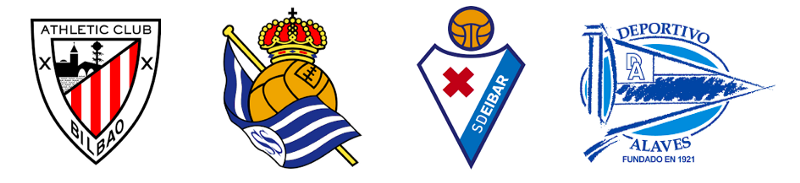
To start off, i’ll quickly run you through some of the major teams that play here, however in this post we’ll be mainly focusing on the two big boys of the area and their local derby. So first we have Athletic Club de Bilbao, (not ‘Atlético’!), and i recon you can guess where they’re based, you’ve probably heard of them before. Then there is Real Sociedad who are the blues and play out of San Sebastian Donostia. In the third major part of the province (Araba) we have Deportivo Alavés from Vitoria-Gasteiz. Lastly and maybe least, but i think Alavés might be slightly worse, is SD Eibar who are located just on the boarder of Bizcaya and Gipuzkoa. Special shout outs to CA Osasuna and their promotion to the first division this year too, they’re based in Pamplona, Navarre.
(All locations broken down in my previous post if you’re interested — not pretty i know but some promo has to get done — Money affi Make!)

As previously mentioned, we’re going to be breaking down the two biggestclubs in the Basque Country who make up the Euskal Derbia (Basque Derby) as unfortunately the others don’t have as much of an interesting history … and aren’t really all that good (we call these side-dishes) … no offence. So, introducing first, fighting out of the red (and white) corner, boasting the most honours won in the Basque Country, titles and cups combined, it is Athletic Bilbao. Then introducing next, fighting out of the blue (and also white) corner, back to back champions of Spain (in the 1980s) Real Sociedad. These two have been waring it against each other for over a century now and the tension between them when they clash has not got any weaker, no matter where they are in the table. A good old fashion reds vs blues derby!

I will try make it as balanced as possible but Athletic Bilbao have a really interesting and unique philosophy that no other top flight team practice while it also being surprisingly successful. So be prepared if attention leans more their way. The Bilbao narrative comes from Fabián Laespada Martinez after a 2 hour conversation about the beautiful game. Basque Language professor at the Universidad de Deusto and one of my teachers. Very funny old man, full-time Athletic fan and bleeds red. (all facts google checked too)
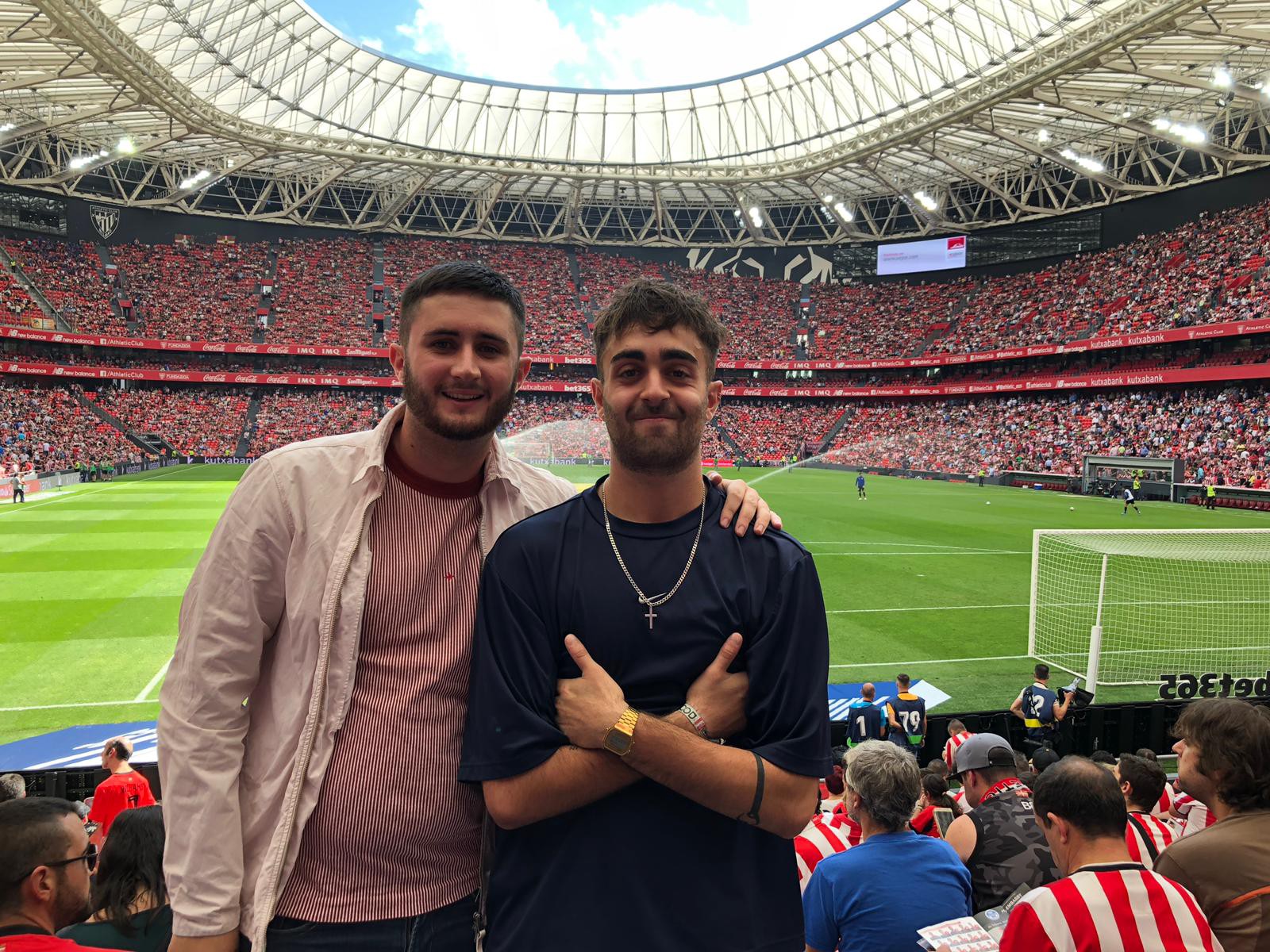
me and Pol aka Paul @ the San Mamés Stadium, Bilbao. Proper atmosphere to say the least

In the second half of the 19th century British entrepreneurs set up mines in Bilbao to take advantage of the abundant amount of iron ore there. They in turn brought with them some cultural practices too, one of them being the game of football. This inspired a group of 11 towns folk from Neguri (a town in Bizcaya, majority of mines were based there) to set up a team and go against some British and other local friendly teams. As popularity for the sport grew, by 1898 the club Athletic Club de Bilbao was born making it one of the oldest in La Liga. Not only one of the oldest but they also share the prestige of having never being relegated from the top division, sharing this honour with only two other clubs, Real Madrid and Barcelona. Very flippin’ impressive when you consider the self-inflicted (but very very respectable) disadvantage they have, we’ll touch on this in a second.

Now the Basque Country and mainland Spain (especially Madrid) have a very interesting relationship, so interesting and deep-rooted that it really needs its own post altogether, that’ll come. But surprisingly enough, i bet you didn’t know that the club Atlético Madrid was also founded by thepeople of Bilbao who moved to Madrid in 1903! Makes sense when you compare their badge and kit to that of Bilbao’s, got little red and whitecoordination going on there. It was originally named ‘Athletic’ too, but in 1939 when General Franco won the Spanish Civil War and began his whole Spanish nationalism thing (almost like Hitler) – He changed both clubs names to Atlético to sound more Spanish and to erase any support for regionalist individuality. Bilbao managed to change theres back to the original after the death of Franco in 1975 and they still use it today. Besides the change in name one thing has always stayed the same, and thats the club’s philosophy.excuse that next noise, must have been excited or something lool

This special philosophy i keep banging on about is to do with the selection and recruitment of their players. The club only uses players that are of Basque origin or who have grown up in the region since they were young! Any football fan should appreciate the significance of an ideology like this and the difficulties that come with practicing it. Especially in this era of football where success at the highest level is closely linked with the amount of money a club has to afford on the best squad of players possible, from all over the world. This means that the pool of players Athletic Bilbao have to play with is a small fraction compared to every one of its competitors. They are the only top flight team in Europe with this policy and even more surprisingly, they’ve had a decent amount of success. Winning 8 division titles (although last one was 83/84), 25 domestic cups and 2 Europa League titles (11/12) those are very respectable stats considering their personnel restrictions. They’ve even produced league legends like Rafael Aranzadi or ‘Pitxitxi’ who got the award for our equivalent of the golden boot named after him, the Trofeo Pichichi.

Now its time to speak about the other main competitor playing in the Basque region and thats Real Sociedad. This narrative comes from my uncle Osaba Aitor, not as old as Fabián and this guy bleeds blue instead. (Just like me but we up the Chels every. single. time!) He bleeds so much blue that even his offspring plays in the academy, my little cousin.

So the story goes that football was introduced to San Sebastian on the return of students and workers coming back from Britain in early the 1900s. It took off instantly as a large group of locals came together in 1904 to form San Sebastian Recreation Club and a year later they competed in the Copa del Rey. They ended up winning the cup in 1909 and after a few legal complications they managed to lock down the name Sociedad de Fútbol that same year. Back then San Sebastian used to be a very popularsummer spot for the King Alfonso XIII who gave the club his ‘patronage’ (fancy word for ‘support’) which moulded the club further to the one we know today: Real Sociedad, ‘Real’ meaning ‘Royal’. The club was one of the founding members of La Liga when it started in 1929 although its success can be seen as varied having been relegated a number of times.

Unfortunately, La Real don’t have a special philosophy like Bilbao does but they do have one pretty commendable statistic. Since the 29th of January 1961, in their match against Mallorca, the club has always had a player that has come through their academy/reserve team (El Sanse) in their starting-line up for every game till present. Very respectable considering how diverse the game and teams are now, but if you’re good enough you’re old enough! They aren’t as decorated as their rivals, only winning 2 league titles but these were back to back in 1980–82 which is impressive for any team. They’ve won 3 cups in total: 2 Copa del Rey and the first everSupercopa de España.from unc’s phone — young cuz giving it large!

When these two clash head to head its always a very good contest like any great derby. I said in my last post that there is no prouder person than a Basque person, so imagine the amount of pride on the line when their teams are battling against eachothers neighbours for the bragging rights of the season. Statistically its pretty close, Bilbao winning 68 times to Real’s 54wins, with 43 draws between them. Now for Fabián, he argues that:

(interpreted) “for Sociedad it is a much bigger game in the calendar than for us, they always come with something to prove”

However my uncle’s got some justifications:

(interpreted) “at a fan level you can say that theres a good vibe, of course there are nice but also silly fans on both sides. The main problem comes at club institutional level. Many Bilbao presidents have been hostile to the other neighbouring Basque clubs, due to their ‘Basque only player policy’, as they believe that those players brought up through the other clubs should play for them instead. Thus, due to their economic power and prioritised backing from the Basque Government and Council, they are able to buy the best talent and slowly become the ‘only’ team in the Euskal Herria.”

doesn’t even compare to the scenes of the derby, couldn’t get tickets that time but going to the game in San Seb tho, so will update this!

To finish off, its interesting to note that when Spain won the World Cup in 2010 there were very few (if so very little) public demonstrations of celebration for this moment. This was during a time where ETA (Euskadi Ta Askatasuna), which is pretty much the Basque equivalent of the IRA(and if you still don’t know what I’m on about then flippin’ read a book or something), was still active so it was still relatively risky to whip out a Spanish flag in public. Interesting when you’d think a World Cup would unite a nation, not to say behind closed doors people weren’t happy, but this all goes back to what i was saying about the Basque Country’s complex relationship with mainland Spain. Again, this will all be explained in a future post.

But for now i hope you found this post relatively interesting and informative. Expect more content coming soon but until then, i’ve been your Boy in Bizkaia aka the Young Brit in Bilbao wishing you even more life and prosperity. Bless!
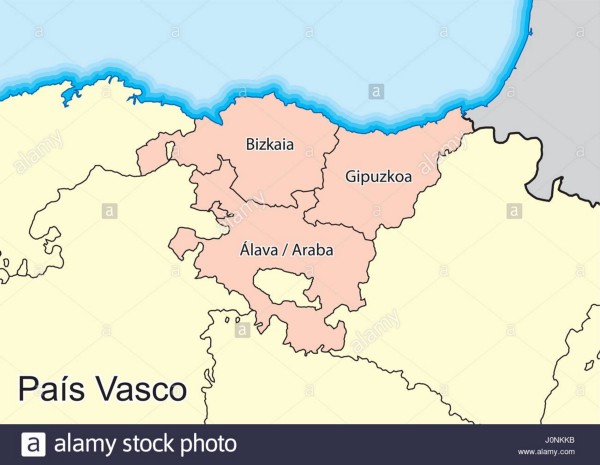
Introducing the Underdog: the Basque Country // Euskadi

In my opinion, the Basque Country of Spain is the most underrated region in the whole of the nation! Of course, when you think of a visit to Spain, the first places you’d think of would be Madrid, Barcelona, Seville, but what if i were to tell you that you’d be making a huge mistake.

In these series of blogs (implying there’ll be more to come) i’ll be presenting to you the best of what this plentiful land has to offer while also including some interesting cultural insights that you almost definitely haven’t heard of before. All content coming to you first hand from your Boy in Bizkaia aka the Young Brit in Bilbao, operating on the front lines for a genuine perspective on the region.

In this entry i want to give you a brief overview on the 3 main parts that make up the country, focusing on their major cities, and make a case as to why they’re so worthwhile visiting. Other than; “Oh, the people are really nice” or “Oh yeah, the food is great”. Which to be fair, is still pretty true, but i’ll try offer up some other cases too!

The whole region is located at the very north of Spain, being called Euskadi in native tongue, and is split into 3 parts having one major city in each.The first being Bizkaia aka Biscay, home to Bilbao and the Guggenheim Museum. Gipuzkoa which hosts San Sebastian aka Donostia, the so called gem of the entire Basque Country. And lastly but not least, Álava or Araba where you can find the capital of Euskadi; Vitoria-Gasteiz.

oi nothing beats a stock photo ok
oi nothing beats a stock photo ok

Each part really has its own distinct vibe with its own unique versions of the Basque traditions, cultural practices, way of life and even different languages. If your looking for the most traditional and ancestral representation of Spain then look no further because the oldest remains discovered in the region date back to 150,000 BC! No lie, thats pretty old, but realistically the traditions you’d see today would have originated from the period just before Romanisation took place, around 2500–900 BC. The point i’m trying to make here is that Basque Country has a deep rooted history and sense of tradition which they’ve done a class job of upholding. It’s something they’re very proud of and trust me, you’ll clock it when you get here, there is no one more prouder than an Euskaldun (Basque person).

The first place we’ll get into is Bizkaia and Bilbao where i’m currently doing my year abroad, studying at the Universidad de Deusto. Out of the 3 major cities the vibe here is by far the most creative and imaginative. Every form of art is thriving here wether its music, film, theatre, contemporary art or architecture, you can find it. Every other weekend there seems to be a music or film festival going on in Casco Viejo (the Old Town) where you’ll definitely be visiting as the scenes there are sensational.can’t upload videos straight to here so the quality is a bit peak :/

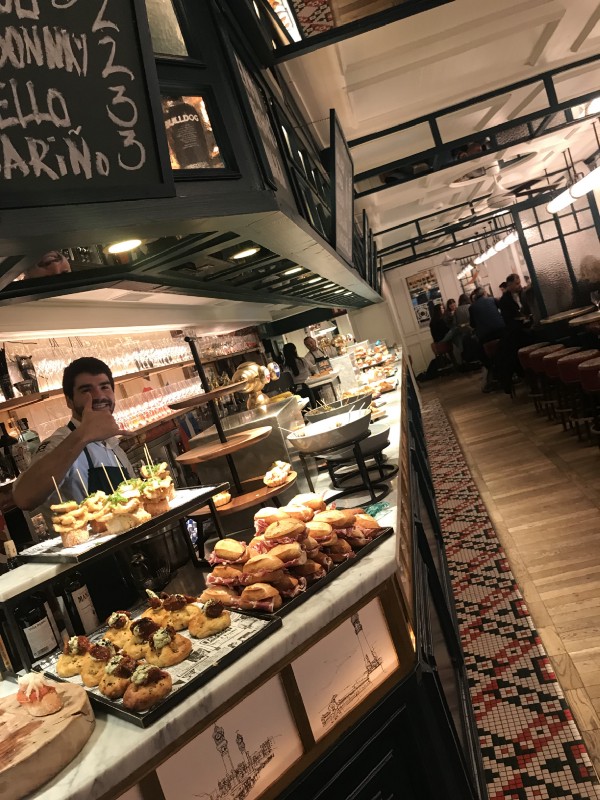
In a classic early-modern Spanish style the narrow streets of Casco Viejo are rammed with countless bars, restaurants and artisan style shops/stalls. The streets are always active and bustling with people as this side of Bilbao is also greatly loved by the locals too. I’d say you’d really want to go Plaza Nueva as you can munch on some of the finest pintxos (‘pinchos’ in Basque) the city has to offer. They look like these things…

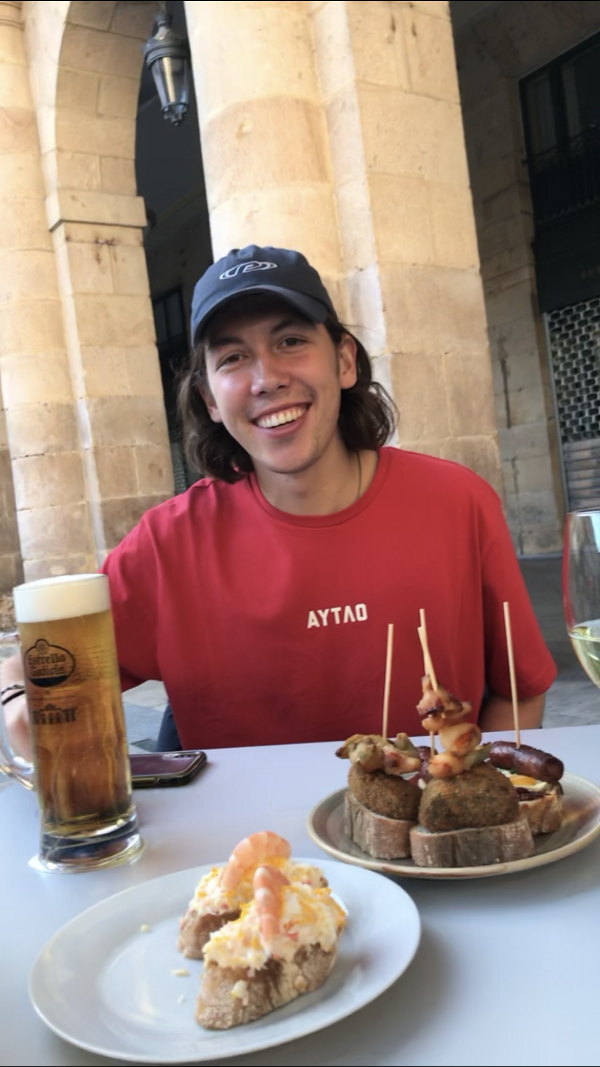
this is Muz and these were from Culmen Bilbao in Plaza Nueva and they were v piff
superb stuff

This is Muz and these were from Culmen Bilbao in Plaza Nueva, they were very piff.

Make sure you also check out Restaurant Víctor Montes, located in the square too, if your after some proper gourmet Basque cuisine.

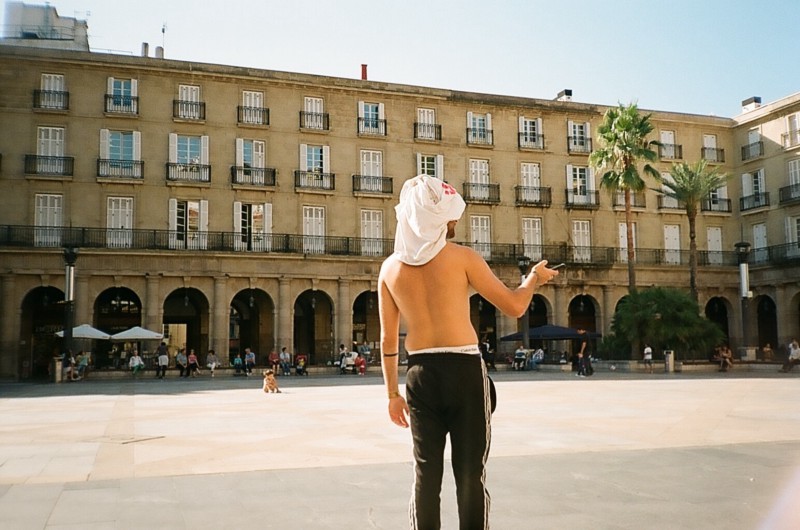
this is me in the plaza, need to do more gym lol

Now, you can’t say that you’ve made the most of a holiday if you haven’t gone to a museum, so i’m going to help you out. Luckily for you, Bilbao has a nice variety of museums to really help you gather a better idea of the history of the region, or if you’d just like to look at some cool things. The first museum we went to was the Museo de Bellas Artes de Bilbao, less historically inclined but it’s definitely one for you art heads, there’s lots of cool stuff there too. But if you really want to sink your teeth into some history then head back to Casco Viejo with your notebook and go to the Museo Vasco to understand more about the long struggle of the Basque people.

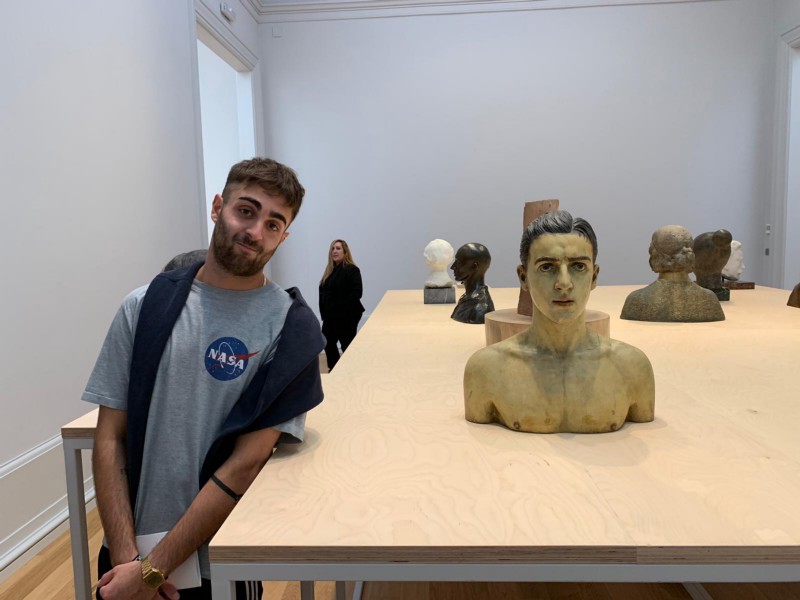
from the art museum, couldn’t tell you much about this piece but if you’ve never seen a Basque person before they look kind of look like this

If you had any idea of Bilbao and the Basque Country before reading this post you’re probably thinking “what’s this guy got against the Guggenheim Museum?”. Nothing, i just think it deserves its own section as the museum holds a greater weight than just simply being a fancy piece of architecture.

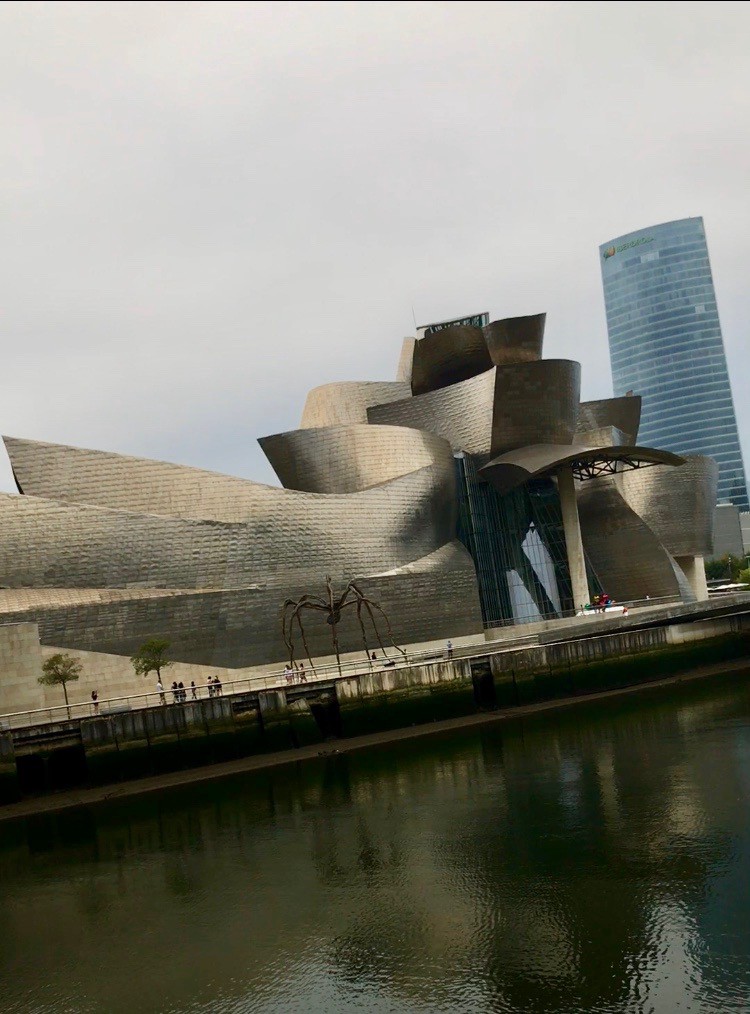
Opened in 1997, the museum was built on the river where the old shipping ports used to be in the times of the Spanish Republics and the Dictatorship of General Franco. Having always been a heavily industrialised part of Spain, in the wake of Globalisation and in Spain’s transition to democracy (c. 1975), the city went through some very tough times in the process of de-industrialisation. Especially after an estuary flood in 1983 which cost the city around 360 million Euro in damages! But the city managed to bounce back due to massive investments in infrastructure and urban renewal, the first of which being this museum, which now helps bring in a steady income to the community. By paying homage to its roots in the style of a shipyard, this museum is a symbol of the city’s survival of a very tough economic transition that many other places are still struggling to overcome today.

Despite being round 5th on my list of things to do, the Guggenheim Museum should be the 1st on yours.

pretty proud of this one, you can see the proof of that economic journey between the two buildings

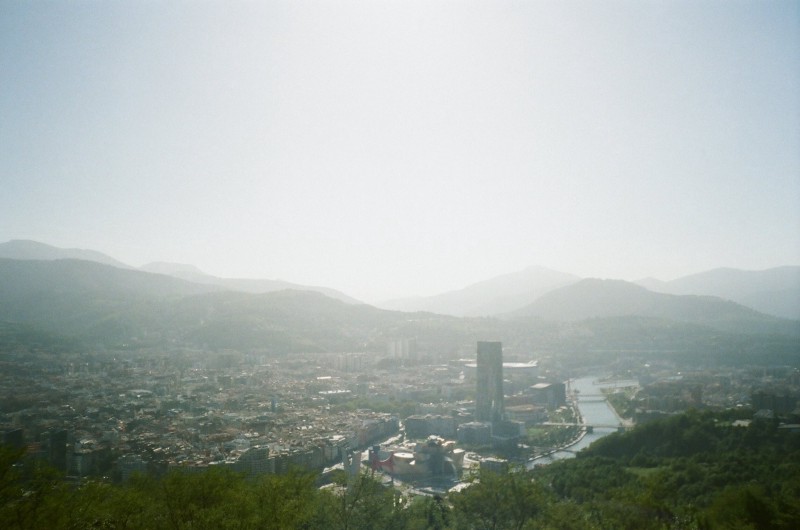
I’ve only just scratched the surface when it comes to stuff to do here, not evening mentioning some of the more rural spectacles of Bizkaia, but don’t worry, there’ll be much more to come. We’ll finish up Bilbao with an honourable mention to the funicular or ‘cable car’ for normal people (didn’t know what it meant either) as you can get a magnificent view from on top of the hill of the whole city!

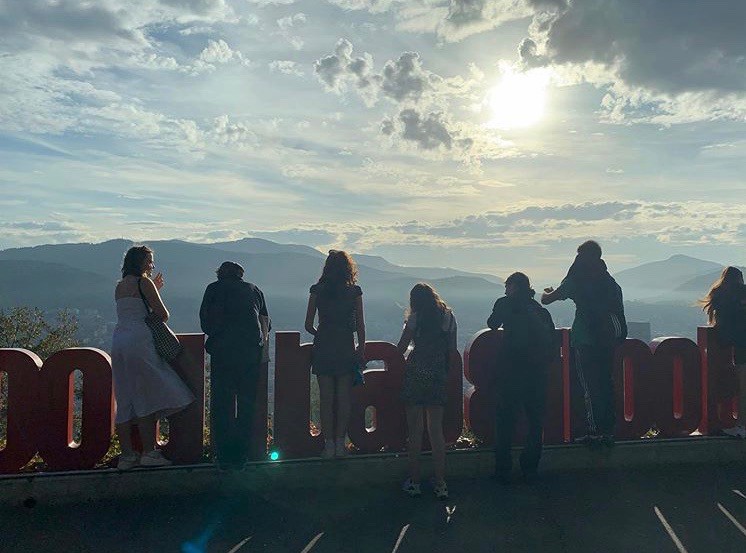
courtesy of: Mazlaa aka Mary Lodge
this ones from Dana’s IG (Dana Sami)

The next part of Euskadi we’ll have a look at is Gipuzkoa and it’s main city San Sebastian (Donostia). This place is literally like a second home for me as it’s where all my mother’s family are from and live. As previously mentioned Donostia is regarded as the jewel of the entire Basque region and its very worthy of that title. With three beaches and many sights to see this costal sensation is a must visit.

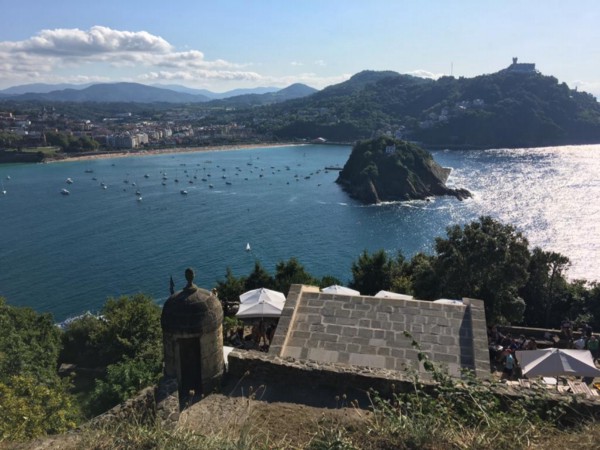
It’s impossible to miss the Playa de La Concha where the bay and harbour are located. The long stretch of beach connecting the two mountains either side of the bay makes for a hefty three course visual feast. I’d have a walk up Monte Urgull which is the mountain with the statue of Jesus on it. It only takes 25–30 minutes to reach the old fort which has been converted into a museum/cafe and the views from up there are 11/10. Climb up a little further and you’ll end up reaching the massive statue and alter to catch a few blessings, Amen!

from the fort, doesn’t do it justice, probs captured 40% of total view

You have the luxury of knowing that whenever you plan to come here there’ll be some sort of festival to get involved with! In mid-August is when Donostia celebrates Semana Grande, which as the name implies is a large week of festivities that carries on until the start of September when the Euskal Jaiak takes place (a big regatta). All centred around La Concha the streets of the old town and the bay are packed with people all drinking and having a good time.scenes from the main beach (Playa de La Concha)

Besides catching the firework displays of Semana Grande another hugely popular pass time here is surfing. Having three beaches you could have guessed it but the one you’d need to go to is Playa Zurriola just east of the bay if your looking for some certified big waves. Donostia has a great mix of coast and city making for a very diverse holiday having the best of both worlds.

Casa Vergara, only one of the many bars here that takes pintxos to a diff level

Before we wrap up with San Sebastian the most important point must be said, and it’s about food! When we’re talking about food Donostia has not come to play any games. There are five restaurants in the whole of the country that boast having three Michelin stars to their name, and three of them are right here! With a total of 16 stars across the entire city, the knock on affects of having such a high quality inspires the less so fancy places to really hold a very high standard of themselves. To finish there’s two places i highly recommend, and with the up most seriousness you can’t overlook these spots. If you want proper seafood of all sorts then go to Txoko, on the harbour at the base of Monte Urgull, and order the monkfish, that’s all i’m going to say. If your after some high quality tapas (different to pintxos these are like starter sized plates) then Txuleta in the Old Town is undoubtedly the one. No lies when i tell you the best calamari i have ever eaten is distributed here. That’s a fact.

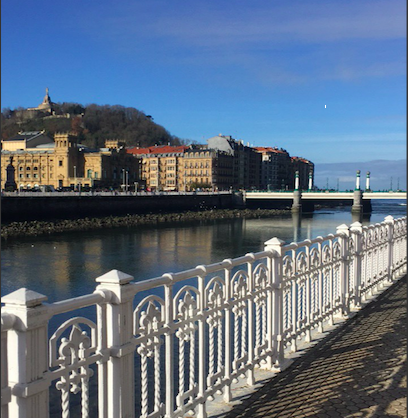
looking onto Monte Urgull east of the bay
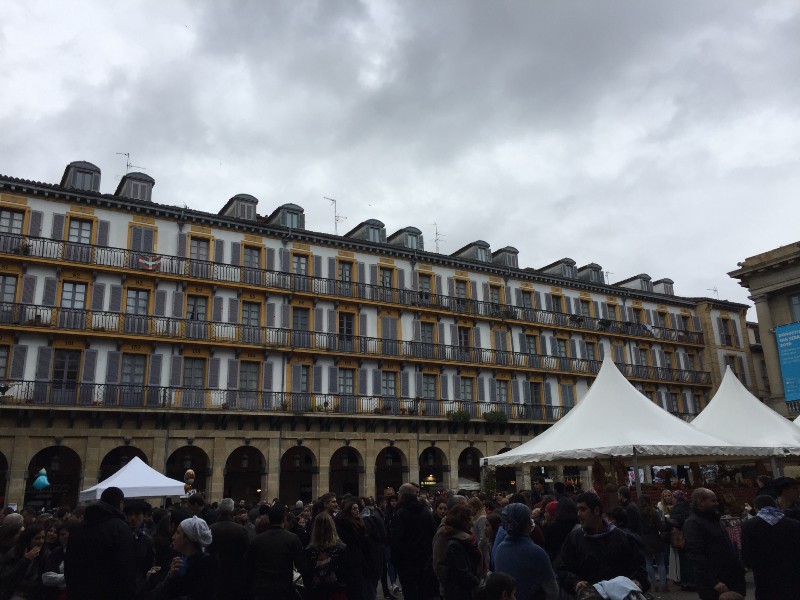
this is Plaza de la Constitución, in old town during Santo Tomás (Christmas celebration)

The last of our locations is Vitoria-Gasteiz situated in Álava. Admittedly, i have the least depth of knowledge and least to say about this part of Euskadi but it’s importance is still very significant. As was said earlier, Vitoria is the political capital of the Basque Country as its home to the Basque Parliament (Eusko Jaurlaritza) and it’s also where the Basque Prime Minister lives. Anyone with a bit of political/historical knowledge of nationalism could appreciate the importance of a place like Vitoria and the role it plays in not only Basque but Spanish modern history too.

Despite being one of the oldest officially founded cities, excluding the Old Town, the rest of city hadn’t experienced major developments until around 60 years ago, so it’s still regarded as a relatively young city. It probably wouldn’t be the first place i’d say to go check out but if your into your politics and want to know how the autonomous government can exist in close quarters with the national government, it could be worth your while.

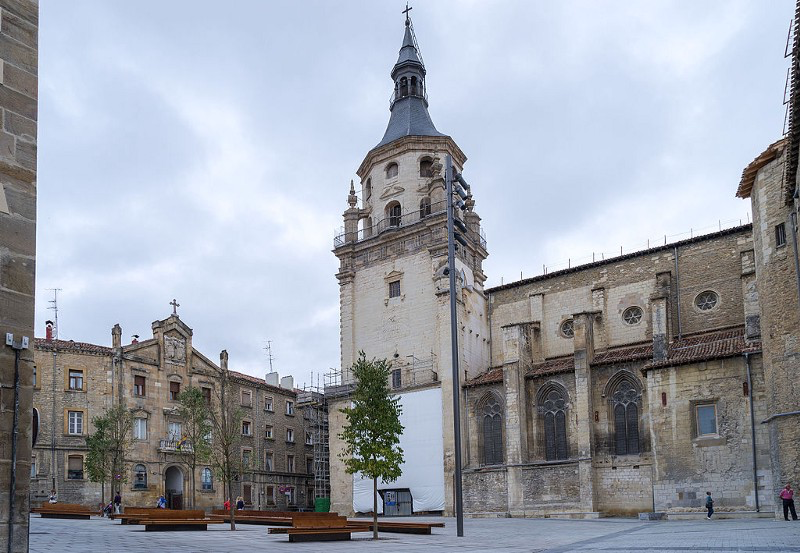
What i can say is that the Old Town (i know i love to bang on about these) is what the city really has going for it. I don’t normally get taken back by cathedrals but the Cathedral de Santa María de Vitoria had something else about it. The scale of the building is what makes it attention grabbing i think. Coupled with the fact that many of the original city wallsare still standing, you can loose your sense of time as it feels like you’ve jumped back 500 years.

I feel for Vitoria a bit by not being able to do it proper justice as i’ve only ever made a quick stop there on the way to Madrid. Either way, the Basque Country has plenty more things to offer, however, Vitoria should still not be forgotten.

not my own photo but thought it deserved one 😦

And with all that being said, i hope you now have a much better idea of what this normally overlooked region has going for it. Without repeating myself i hope that what i’ve shown you in this post sparks interest in this underrated land. You can expect much more content coming to you soon as i’ve still got half a year left of living here and there’s plenty more to talk about.

Until then i’ve been your Boy in Bizkaia aka the Young Brit in Bilbao wishing you more life and prosperity.

Design a site like this with WordPress.com
Get started